
Changelog
Follow up on the latest improvements and updates.
RSS
If you use Claude, ChatGPT, Cursor, or another AI tool that supports MCP (Model Context Protocol), you can now connect it directly to your SortMe data.
Once connected, your AI assistant can read your transactions, account balances, spending by category, goals, and net worth. That means you can ask natural-language questions about your finances without copying data manually or switching between apps.
The connection is read-only and secure. You approve it, SortMe does not write anything, and you can revoke access at any time from Settings. To get started, head to Settings, find the "Connected AI tools" section, and follow the setup steps for your AI tool.
This is a beta feature aimed at users who are already using AI tools day-to-day. If that is you, we would love to hear how you use it.
Cancelled recurring payments on your Subscriptions page now show the date they last charged you, not the date SortMe detected the cancellation.
Previously, if a gym membership stopped charging in November 2024, the card might read "Cancelled 02 Sep 2026" (the day our scanner flagged it). That was confusing. Now it reads "Last payment Nov 2024", which is the number you actually care about. The scan date is still shown as a small secondary note below it.
If SortMe can't find a confirmed last charge in your transaction history, the secondary note still appears, and the "Last payment" line is hidden rather than showing a guess.
When you first signed up, SortMe's AI scanned your bank history and found recurring payments that had already stopped before you joined: old rent, old gym memberships, old subscriptions. Those were appearing in "Recently Cancelled" and being added to your "Total Saved" number, which could make it look like you had saved thousands of dollars without doing anything.
That has been fixed. Pre-SortMe cancelled payments no longer appear in "Recently Cancelled" and no longer count toward "Total Saved". The number now tells the truth: it only reflects subscriptions you have actually cancelled through SortMe.
SortMe now checks before overwriting one of your transaction rules. If you try to save a rule with criteria that matches an existing one, you will see a prompt asking whether to update the old rule or cancel.
This protects rules you have already set up, so that categorising a transaction or saving a new rule does not silently erase your existing settings.
To see this in action, go to any transaction, change its category, and choose to save it as a rule. If a matching rule already exists, a confirmation dialog will appear.
You can now import transactions from a CSV file into any account in SortMe, not just transaction accounts. Credit cards, loans, mortgages, savings accounts, and other account types are all supported.
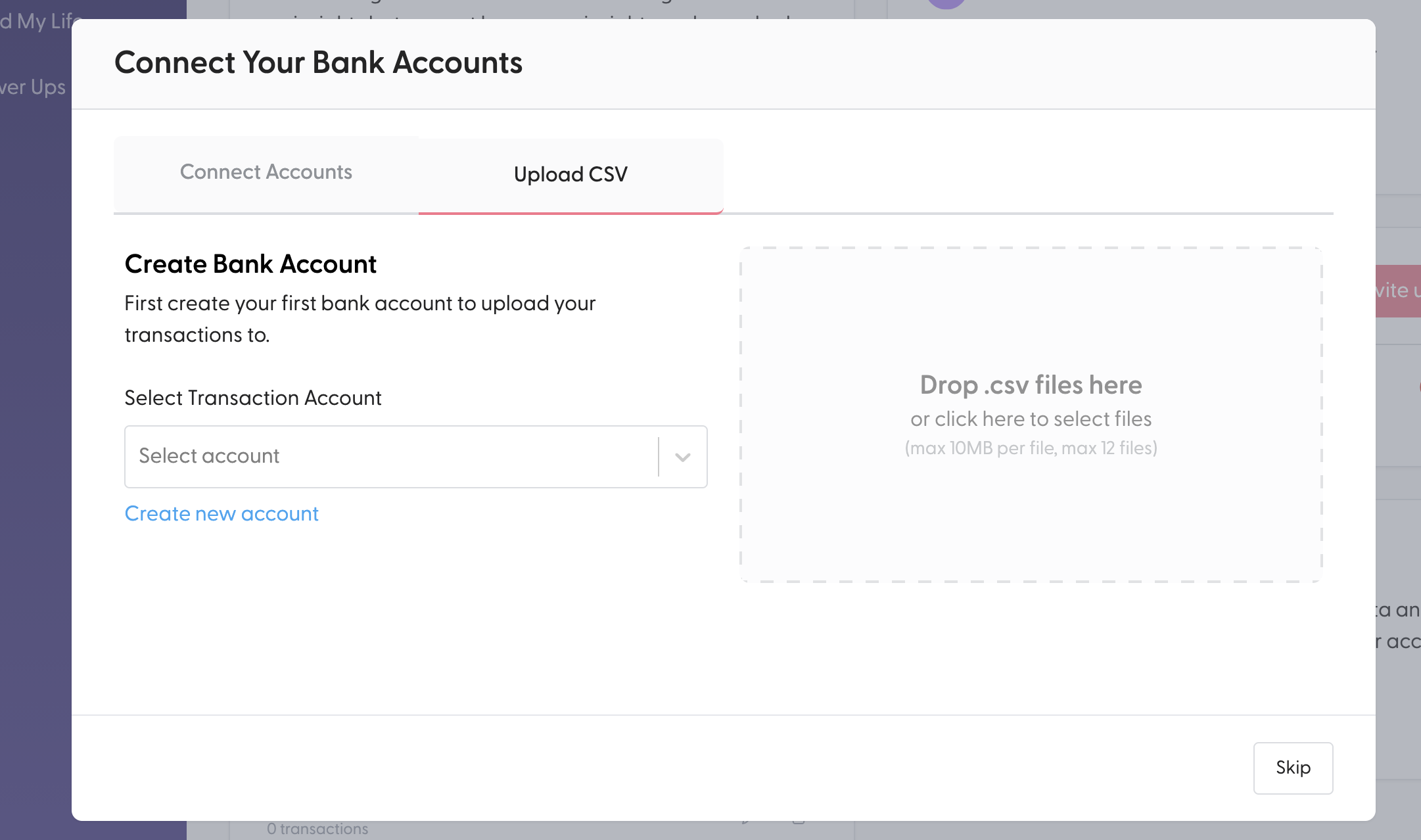
Previously, the CSV upload flow only let you choose from transaction accounts. If you wanted to bring in historical data for a credit card or loan, you were stuck. Now you can select any account from the dropdown, or create a new one on the spot.
To import, head to Settings, choose Import Transactions, and upload your CSV file. From there, pick the account you want to import into.
If you have tried searching for a beautician, waxing appointment, eyebrow treatment, or pedicure in the category picker and come up empty, that is now fixed.
Searching for terms like "beautician", "waxing", "eyebrows", "threading", "lashes", "manicure", or "pedicure" now brings up Haircuts and Treatments, so you can quickly file these transactions without hunting through the full list.
Just tap the category on any transaction and type what you are looking for.
Your Cashflow forecast now lets you set your own safety minimum.
Previously, the safety minimum line on your Cashflow forecast was fixed at 25% of your monthly budgeted expenses, calculated automatically. You had no way to see how it was set or change it to match your actual situation.
Now, when your forecast first loads, we seed a sensible starting point at 50% of your budgeted expenses. From there, you can edit it directly on the Cashflow page and save your own number. Once set, the value is yours: budget changes, reconnections, and re-loading will never overwrite it.
Head to the Cashflow page to review your safety minimum and adjust it to suit your household.
The accounts you choose for your Cashflow forecast now stick between visits.
Previously, the Cashflow forecast would reset to default accounts every time you refreshed or came back to the page. If you unticked your credit card or removed an account you did not want included, it would reappear on your next visit. This was especially noticeable after credit cards were included by default.
Now your selection is saved on your account. Any change you make in the Manage Accounts panel is remembered across sessions, across devices, and across refreshes. New accounts you connect that belong in the forecast are added automatically; accounts you have removed stay out.
Open the Cashflow page, set up your preferred accounts once, and they will be there every time you come back.
Your daily and weekly budget review emails now include every category you have turned on in SortMe, not just the ones with a spend target above zero.
Previously, if you tracked a category but left its target at $0 (useful for monitoring spend without setting a hard limit), that category was quietly left out of your review emails. You would see your spending summary but miss those categories entirely. That gap is now closed.
On top of that, if you have set a spend limit on a budget group as a whole, that group target now appears in your email alongside the individual category rows. You can see at a glance whether your group is on track for the cycle, the same way you do on the Budget screen.
No changes needed on your end. Your next review email will automatically reflect all the categories and group limits you have set up.
Your Cashflow Forecast now includes your credit card accounts, giving you a more complete picture of your projected balance.
Previously, credit cards were excluded from the Forecast account picker entirely. For anyone who relies on credit cards for day-to-day spending, this meant the forecast was missing a big piece of the puzzle.
Now, credit card accounts appear in the Manage Accounts picker and are included by default. You can still choose which accounts to include or exclude, and the forecast math updates accordingly.
If you already had a saved account selection, your credit cards have been added automatically. No action needed.
Load More
→